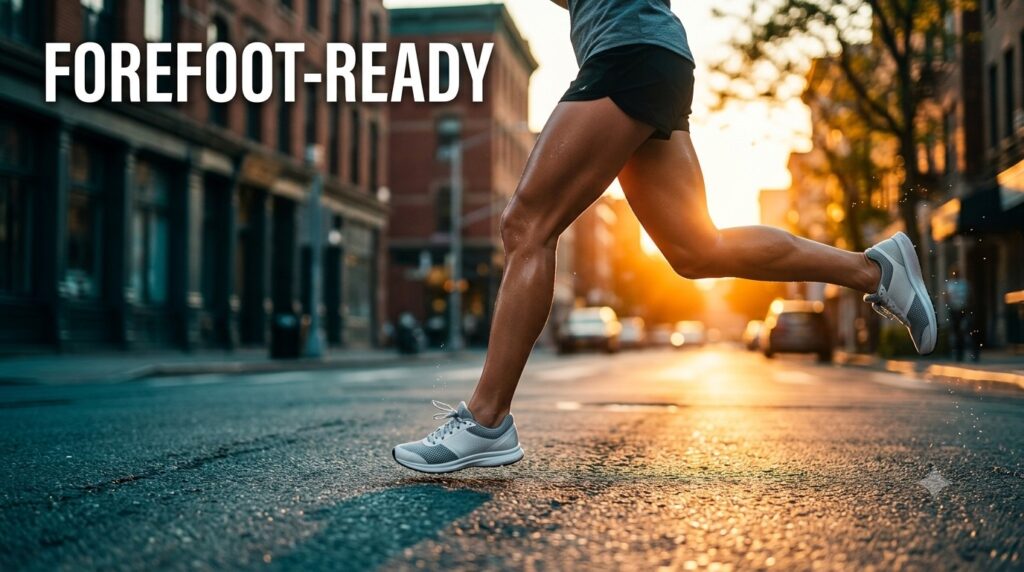
If you land on the ball of your foot when you run, the best running shoes for forefoot strikers can save your legs a whole lot of grief. The wrong pair feels clunky and dead. The right pair feels like a little spring under your toes.
Here’s the thing though. Most shoes on the shelf are built for heel strikers. So if you naturally push off the front of your foot, you need something a bit different.
In this guide, you’ll learn exactly what to look for, which shoes runners keep coming back to, and how to switch without wrecking your calves. No heavy jargon, I promise. Just simple picks you can act on today.
Quick Answer
| Your question | The short answer |
|---|---|
| What makes a shoe good for forefoot strikers? | A lower heel-to-toe drop (0 to 6 mm), springy forefoot cushioning, and a flexible, roomy front. |
| Best all-round pick? | A lightweight daily trainer like the Saucony Kinvara. |
| Best for speed? | A responsive plated racer like the Nike Vaporfly or Saucony Endorphin Speed. |
| Best zero-drop pick? | The Altra Escalante, thanks to its balanced 0 mm platform. |
| Do I need max cushioning? | Not really. You want responsive foam under the forefoot, not a tall, soft heel. |
What Does It Mean to Be a Forefoot Striker?
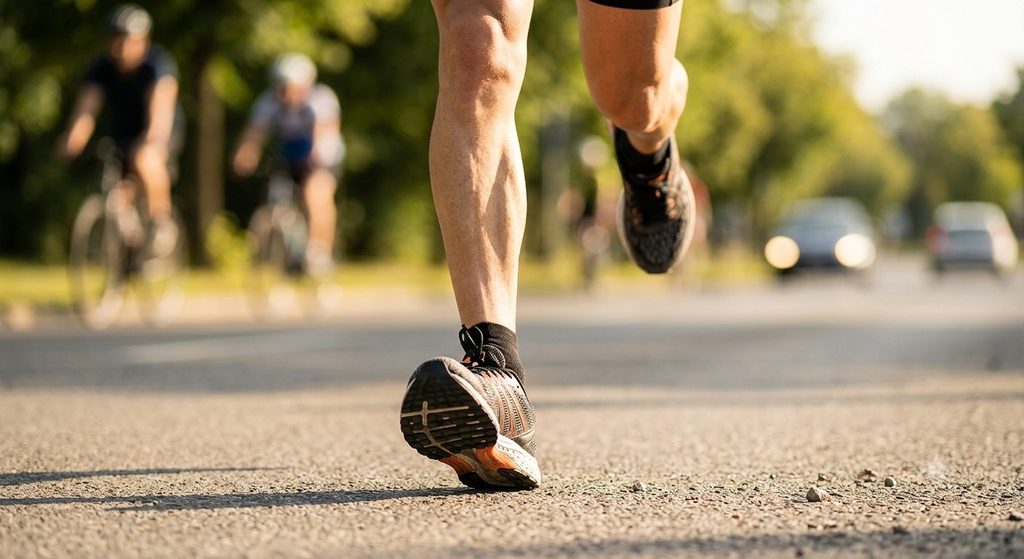
A forefoot striker lands on the front of the foot first, right around the ball, before the heel ever touches down. Sprinters do it naturally. Plenty of distance runners do too, especially at faster paces.
Because the impact hits the front of your foot, your shoe needs to protect and energize that zone. A big, soft heel does almost nothing for you here.
A quick 20-second self-check
Not sure how you land? Try this. Run a short stretch barefoot on a hard floor and listen.
- Soft, quiet landing on the ball of your foot? You’re likely a forefoot striker.
- A loud “slap” as your heel hits first? That’s more of a heel strike.
Also, flip over an old pair of shoes. If the wear shows up mostly under the toes and forefoot, that’s another clue.
Forefoot vs. midfoot vs. heel strike
These three landing styles sit on a spectrum. Here’s the simple version.
- Forefoot: ball of the foot touches first. Common at speed.
- Midfoot: the whole foot lands fairly flat and even.
- Heel: the heel hits first, then rolls forward. Most common overall.
Why your strike pattern changes your shoe choice
Shoe brands build most trainers with a raised, cushioned heel because that’s where heel strikers need help. As a forefoot runner, that extra heel just adds weight and can even trip up your rhythm. Therefore, you want a shoe that flips the priority toward the front.
What Makes the Best Running Shoes for Forefoot Strikers
Before we get to specific models, let’s cover the four things that actually matter. Once you know these, you can judge any shoe on the wall yourself.
Low heel-to-toe drop
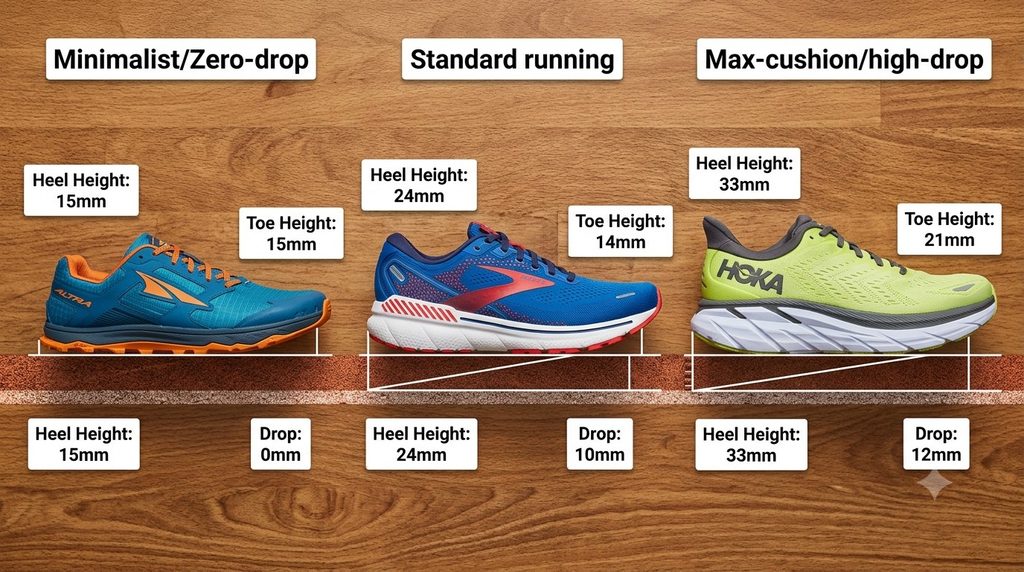
Drop is the height difference between the heel and the forefoot. Heel strikers often like 10 to 12 mm. For forefoot strikers, a lower drop (roughly 0 to 6 mm) usually feels more natural, because it keeps your foot closer to level.
That said, drop is not the whole story. Some fast race shoes have a higher drop yet still suit forefoot runners, thanks to their springy front foam. So treat drop as a guide, not a hard rule.
Responsive forefoot cushioning
Since your impact lands up front, you want foam there that gives energy back. Look for words like PEBA, “responsive,” or “energy return” rather than plush and marshmallow-soft. Soft foam feels nice for two steps, then it feels mushy and slow under a forefoot landing.
Flexibility and a roomy toe box
Your forefoot bends a lot as you push off, so the shoe should bend with it. A stiff, plank-like front fights your stride. A little room in the toe box also lets your toes splay and grip, which helps balance.
Lightweight feel and ground contact
Lighter shoes reward a quick, snappy forefoot stride. Plus, a bit of ground feel helps you sense your landing and stay smooth. You don’t need the lightest shoe on earth, but heavy, overbuilt trainers rarely feel great up front.
Top Running Shoes for Forefoot Strikers in 2026
Here are the picks runners keep recommending, grouped by what you need. Quick note first: shoe brands update models every year, so always double-check the current version’s drop and weight on the official brand site before you buy.
Best lightweight daily trainer: Saucony Kinvara
The Kinvara is a long-time forefoot favorite for good reason. It’s light, it has a modest drop of about 4 mm, and the forefoot feels lively without being harsh. As a result, it works for easy miles and faster days alike. If you want one do-it-all shoe, start here.
Best for speed and racing: Nike Vaporfly (or Saucony Endorphin Speed)
Chasing a personal best? A plated super-shoe like the Nike Vaporfly delivers a punchy, spring-loaded toe-off that forefoot strikers adore. The Saucony Endorphin Speed is a friendlier, less pricey cousin. Both feel fastest exactly where you land.
Best zero-drop pick: Altra Escalante
Altra builds every shoe with a 0 mm drop and a wide, foot-shaped toe box. The Escalante is their smooth, cushioned road option. Consequently, it’s a great match if you love a natural, level platform and room for your toes to spread.
Best cushioned but responsive: Hoka Mach
Want softness that doesn’t turn to mush? The Hoka Mach pairs a lower drop (around 5 mm) with a bouncy, springy midsole. So you get comfort for long runs while still feeling snappy up front.
Best punchy value pick: New Balance FuelCell Rebel
The FuelCell Rebel is light, fun, and full of energy return, usually at a friendlier price than the super-shoes. Meanwhile, its lively forefoot makes quick strides feel effortless. It’s a smart pick if you want speed without the top-tier cost.
Best natural toe box: Topo Athletic Cyclone
Topo sits nicely between traditional shoes and full zero-drop. You get a low drop (around 3 to 5 mm) plus a roomy toe box, without going all the way to 0 mm. Therefore, it’s a comfortable stepping stone if Altra feels like too big a jump.
Forefoot Striker Shoes at a Glance (Comparison Table)
| Shoe | Approx. drop | Best for |
|---|---|---|
| Saucony Kinvara | ~4 mm | Everyday lightweight miles |
| Nike Vaporfly | ~8 mm | Race day and PBs |
| Altra Escalante | 0 mm | Natural, zero-drop feel |
| Hoka Mach | ~5 mm | Cushioned long runs |
| New Balance FuelCell Rebel | ~6 mm | Fun, springy value |
| Topo Athletic Cyclone | ~3-5 mm | Roomy toe box, easy transition |
Specs and prices change between model versions, so confirm the latest details on the brand’s official website before buying.
Video: How to Pick the Best Running Shoes for Forefoot Strikers
Sometimes it just helps to see it. Drop a short review or gait-analysis video right here so readers can watch a real runner explain drop, foam, and fit.
How to Switch to Forefoot Striker Shoes Without Getting Hurt
Moving to a lower drop is exciting, but rushing it is the fastest way to an angry calf. So take it steady with these three steps.
Drop the drop slowly
If you’re coming from a 10 mm shoe, don’t leap straight to 0 mm. Instead, step down gradually, maybe to 6 mm first, and let your body adapt over a few weeks.
Build up your calves and feet
Lower-drop shoes ask more of your calves, Achilles, and foot muscles. Because of that, a little strength work (calf raises, foot drills) goes a long way toward staying pain-free.
Listen to your body
Start with short runs in the new shoes and mix them with your old pair. If your calves feel tight, ease off. Progress should feel challenging, never sharp or painful.
Common Mistakes Forefoot Strikers Make When Buying Shoes
Avoid these and you’re already ahead of most shoppers.
- Chasing max cushioning. A tall, soft heel adds weight you won’t use.
- Ignoring the drop number. It’s usually printed on the brand’s site, so check it.
- Buying too stiff a shoe. Your forefoot needs to bend freely.
- Switching too fast. A sudden drop change is a classic calf-strain trap.
- Skipping the toe box. Cramped toes hurt your push-off and balance.
Where to Buy and What to Check First
You can order online, but a specialty running store adds real value. Many offer a free gait analysis, where staff watch you run and confirm how you actually land. That takes the guesswork out of it.
➡️ Ready to find your pair? Book a free gait analysis at a running specialty store like Fleet Feet and try a few of these shoes on before you commit.
Quick heads-up on trust and safety. Availability, pricing, and even a shoe’s drop can change between versions, so always confirm details on the official brand site or with the retailer. And if you’re dealing with ongoing pain, please check with a physical therapist or sports podiatrist. I’m a running-shoe guide, not a medical professional, and your feet are wonderfully unique.
Final Thoughts on Choosing the Best Running Shoes for Forefoot Strikers
Here’s the short version. As a forefoot striker, aim for a lower drop, responsive foam up front, a flexible sole, and a light, roomy fit. Nail those four, and almost any shoe from the picks above will feel great.
If you’re just starting out, grab the Saucony Kinvara and go run. If you’re chasing speed, look at the Vaporfly or Endorphin Speed. And if you love a natural feel, the Altra Escalante is calling your name.
Your next step is simple. Pick one shoe, try it on a short run, and pay attention to how your forefoot feels. Your legs will tell you pretty quickly if you’ve found the one.
FAQ: Best Running Shoes for Forefoot Strikers
What are the best running shoes for forefoot strikers?
The best running shoes for forefoot strikers combine a low heel-to-toe drop, responsive forefoot foam, and a flexible, roomy front. Popular picks include the Saucony Kinvara, Altra Escalante, Hoka Mach, and, for racing, the Nike Vaporfly.
How do I know if I’m a forefoot striker?
Run a few steps barefoot on a hard floor. If you land softly on the ball of your foot with no loud heel “slap,” you’re likely a forefoot striker. Worn tread under the toes of old shoes is another strong hint.
What heel-to-toe drop is best for forefoot strikers?
Most forefoot strikers feel best in a drop of about 0 to 6 mm, because it keeps the foot closer to level. However, some plated race shoes with a higher drop still suit forefoot runners, so treat drop as a guide rather than a strict rule.
Do forefoot strikers need cushioned running shoes?
Yes, but the right kind. You want responsive, springy foam under the forefoot rather than a tall, soft heel. Too-soft cushioning can feel mushy and slow when you land on the front of your foot.
Are zero-drop shoes good for forefoot strikers?
They can be excellent, since a 0 mm platform feels natural for a front-foot landing. Just transition slowly, because zero-drop shoes ask more of your calves and Achilles than higher-drop trainers do.
Is forefoot striking better than heel striking?
Neither is automatically “better.” Forefoot striking can feel efficient at speed, yet it loads the calves more. The best form is the one that feels smooth and keeps you injury-free, paired with a shoe that matches it.
Can I wear the best running shoes for forefoot strikers if I’m a midfoot striker?
Absolutely. Midfoot strikers land close to the front too, so low-drop, flexible, responsive shoes usually feel great for them as well. Many of the picks above work for both styles.
Do the best running shoes for forefoot strikers help prevent injury?
The right shoe can reduce strain by matching how you land, but it’s not a magic shield. Smart training, gradual mileage, and calf strength matter just as much. See a professional if pain sticks around.
How long do forefoot striker running shoes last?
Most road running shoes last roughly 300 to 500 miles. Lightweight and racing shoes often sit at the lower end. Watch for flattened forefoot foam or worn tread under the toes, and replace when the bounce fades.
What is a good budget running shoe for forefoot strikers?
The New Balance FuelCell Rebel and the Saucony Kinvara both offer a lively forefoot at a friendlier price than super-shoes. Last year’s model of any pick above is another smart way to save money.
Should I switch to a lower-drop shoe gradually?
Yes. Jumping straight from a high-drop shoe to zero-drop is a common cause of calf and Achilles strain. Step down in small stages and rotate with your old shoes while your body adapts.
Do I need different shoes for racing versus daily runs?
Not required, but many forefoot strikers rotate. A durable daily trainer like the Kinvara handles everyday miles, while a springy racer like the Vaporfly comes out on race day for that extra pop.
Social media hashtags (10-15)
#ForefootStrikers #RunningShoes #ForefootStriking #RunningForm #LowDropShoes #RunningTips #RunnersOfInstagram #RunFast #RunningGear #MidfootStrike #RunningCommunity #ShoeReview #ZeroDrop #RunHappy #MarathonTraining