Rainy season always seems to show up right when your clean Nike shoes are looking their best. Then one wet sidewalk, one puddle splash, and suddenly you’re dealing with water marks, dirty midsoles, and that damp smell that sticks around longer than it should.
If you ignore protection now, the damage usually shows up later. Fabric darkens, leather gets spots, and white soles start looking tired fast. The good news is you don’t need a complicated setup to avoid that. You just need the right protector, a little consistency, and a better idea of what actually helps Nike shoes hold up when the weather turns.
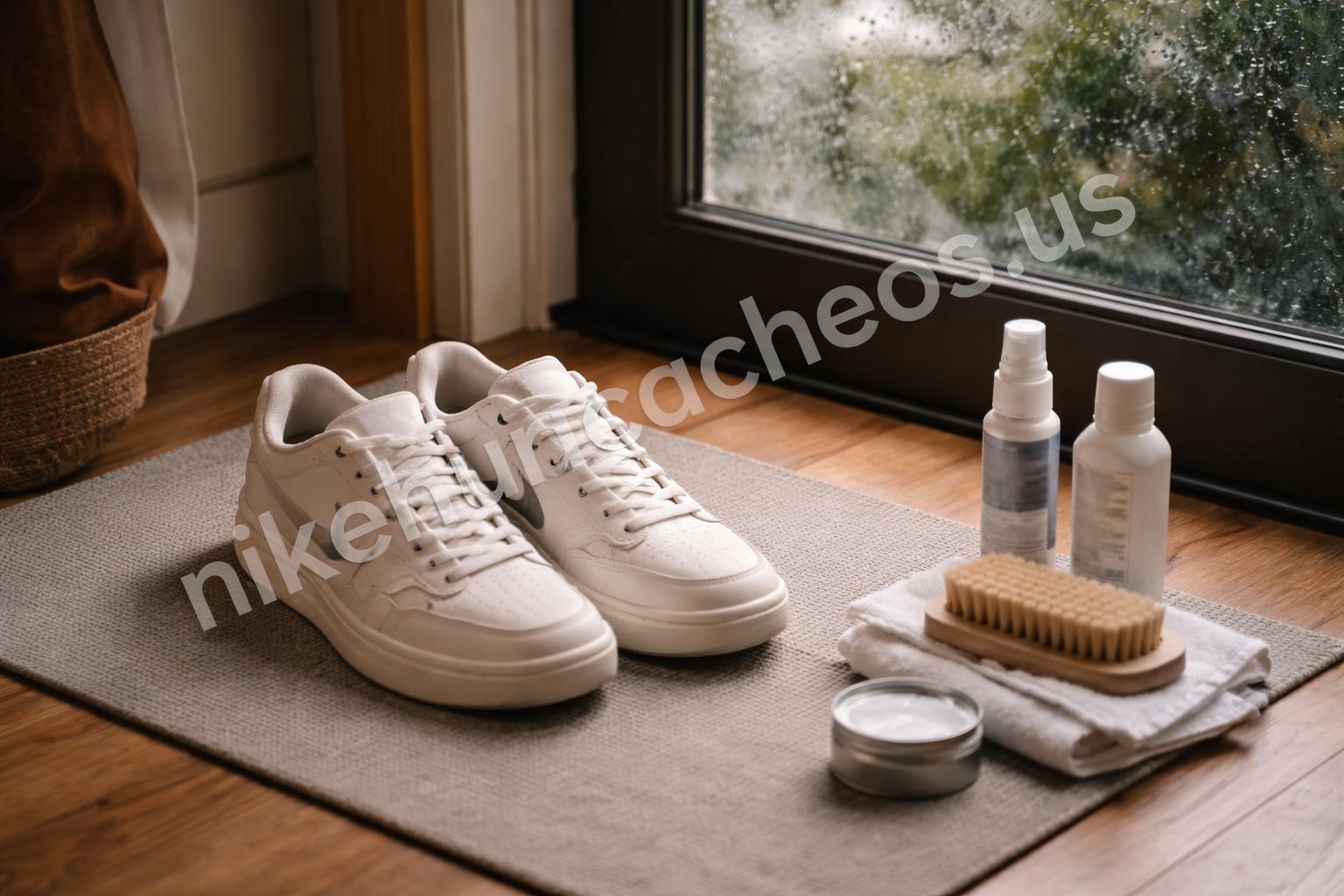
What a sneaker protector actually does
A lot of people think a protector just “adds a coating.” That’s true, but it’s also a little too simple.
What you want is something that helps water bead up instead of soaking in, because once moisture gets into mesh or suede, cleanup turns into a chore. On Nike shoes, that matters even more since many pairs use mixed materials. One section may handle water fine, while the next one stains almost immediately.
A decent spray doesn’t make shoes invincible. It just buys you time. That’s the real benefit.
The goal is less absorption, not zero maintenance. If you expect a spray to make your shoes rainproof forever, you’ll be disappointed. But if you use it before the season gets messy, it can save you a lot of cleanup later.
The safest place to start: a water repellent spray
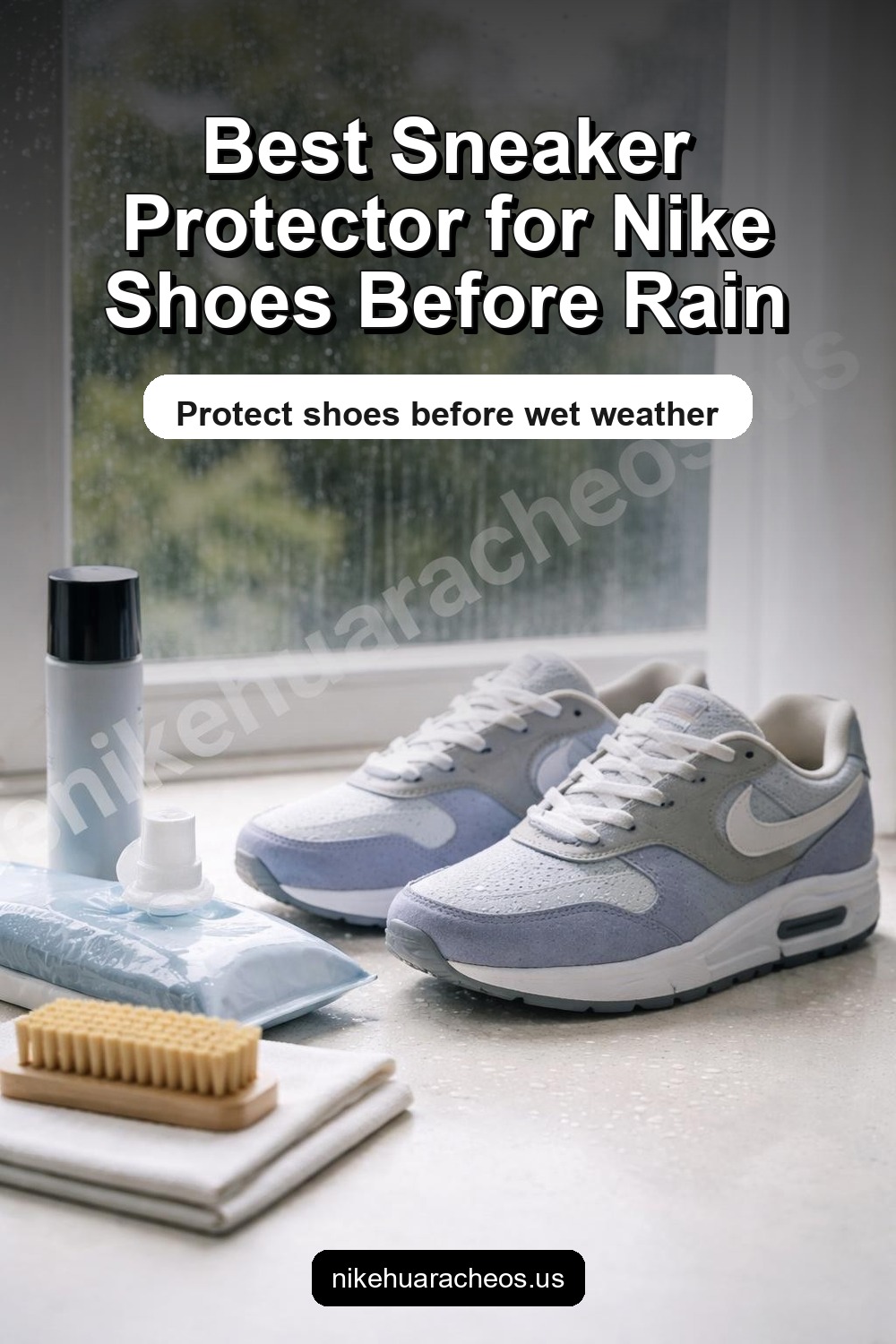
For most Nike shoes, a spray is the easiest first move. It reaches the fabric, mesh, knit, and even some leather surfaces more evenly than wipes or creams.
If you’re comparing options, I’d start with this guide to the best water repellent spray for Nike shoes to buy now. It’s the kind of product category that makes sense before rainy season because it’s fast to use and doesn’t need much skill.
What matters most is how the spray behaves after it dries.
- It should dry clear.
- It should not leave a chalky film.
- It should be safe for the materials on your pair.
- It should still let the shoe breathe.
That last part gets overlooked. Some sprays leave shoes feeling sealed up in a weird way, and that’s annoying on everyday sneakers. You want protection, not a stiff finish that makes the shoe feel odd on foot.
One thing I learned the hard way is to test the spray on a small hidden area first. Even products that claim to be safe can react differently on suede, nubuck, or dyed fabric.
Nike materials don’t all need the same kind of care
This is where people get tripped up. Nike shoes aren’t one single material, and the best protector depends on what you’re wearing.
Mesh and knit
These soak through quickly, so a water repellent spray helps most here. It won’t make them waterproof, but it can slow down how fast rain gets in.
Leather and synthetic leather
These usually handle moisture better, but they still pick up spots and grime. A spray can help, though it’s also smart to wipe them down after wear.
Suede and nubuck
These are the most sensitive. I’d be careful here. Use a product made for those materials, and don’t drench the shoe. Too much liquid can leave its own mark, which is frustrating because you were trying to prevent one.
Knit-heavy lifestyle pairs
These are comfortable, but they’re not exactly built to shrug off a rainy commute. A protector helps more than people expect, especially if you walk a lot or wear them in mixed weather.
Material matters more than brand loyalty here. Two Nike shoes can need completely different care even if they look similar at a glance.
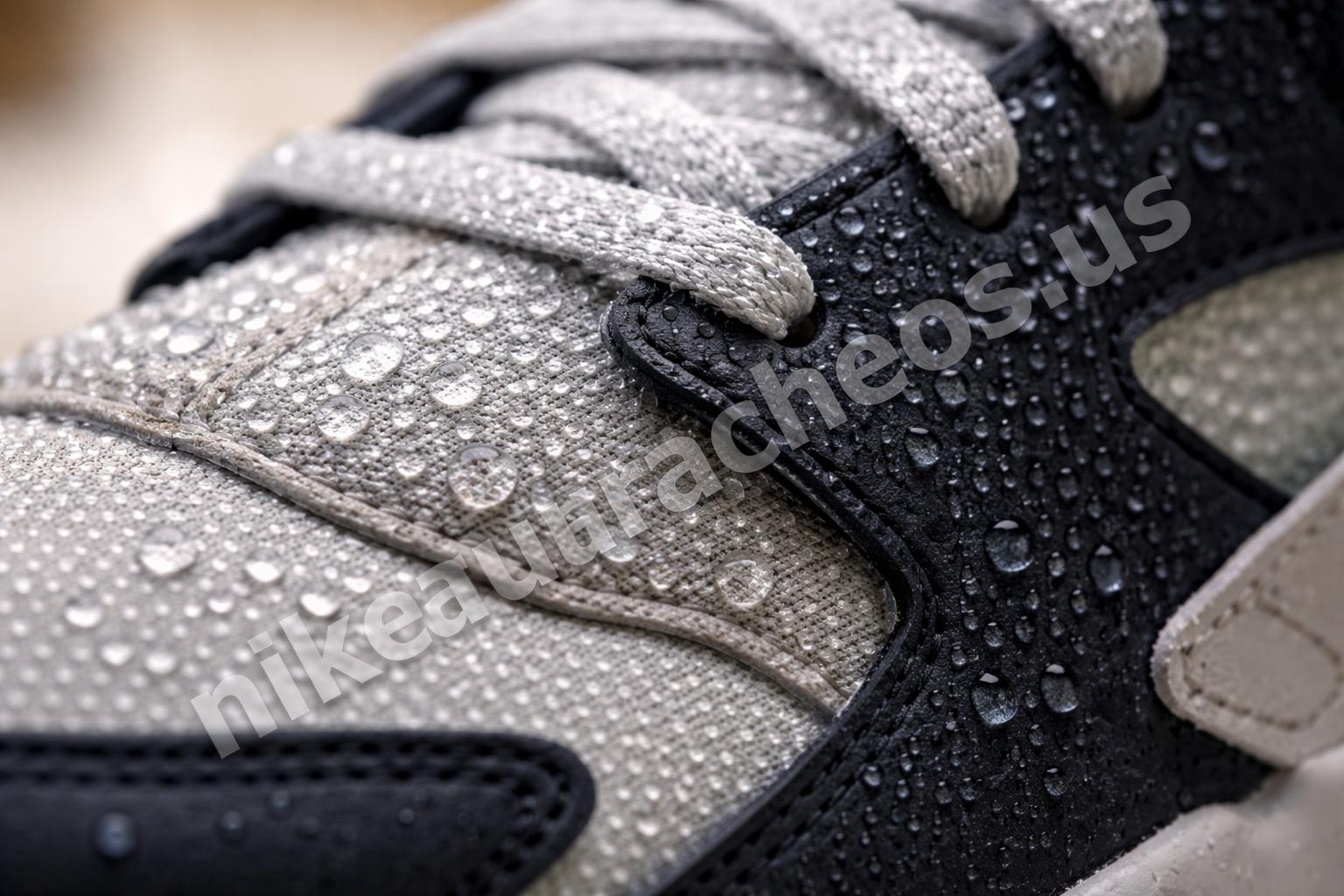
Why cleaning before protecting makes a big difference
This part sounds boring, but it changes the result.
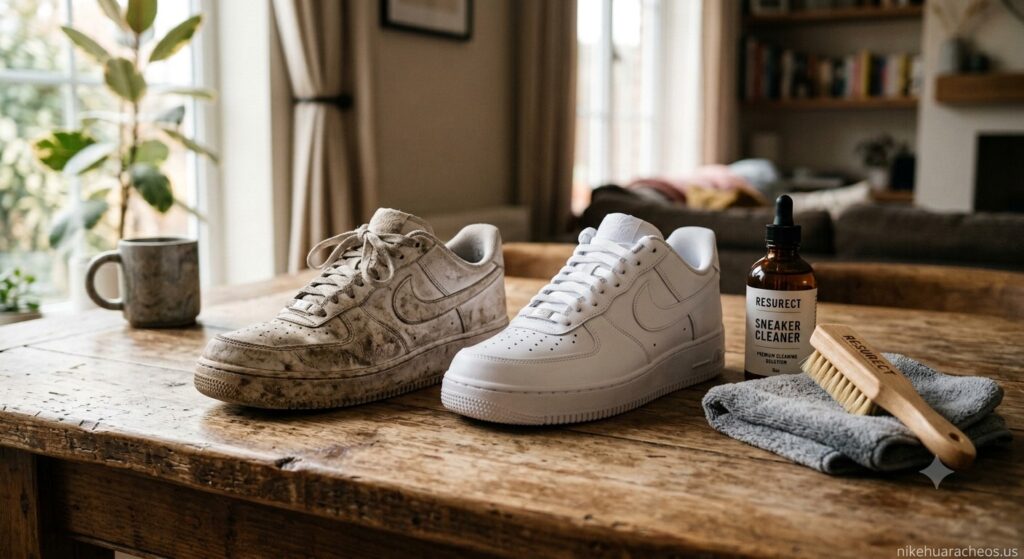
If you spray over dust, road grit, or old stains, you’re basically sealing the mess in place. That’s how shoes end up looking worse even after “care.” I’ve seen people skip the prep step because they’re in a hurry, and then wonder why the protector didn’t work well.
The cleaner the shoe, the better the spray can bond to the surface.
A simple prep routine works fine:
- Brush off loose dirt.
- Wipe the upper gently.
- Let the shoe dry fully.
- Apply protector in a light, even coat.
- Wait for it to cure before wearing.
That last part matters more than most people think. If you wear the pair too soon, you interrupt the whole process. Then the rain hits and the protection isn’t where it should be.
Where cleaning wipes fit into the rainy-season routine
Not every problem needs a full wash. Sometimes you just need to get mud off the sidewall before it dries into a stubborn stain.
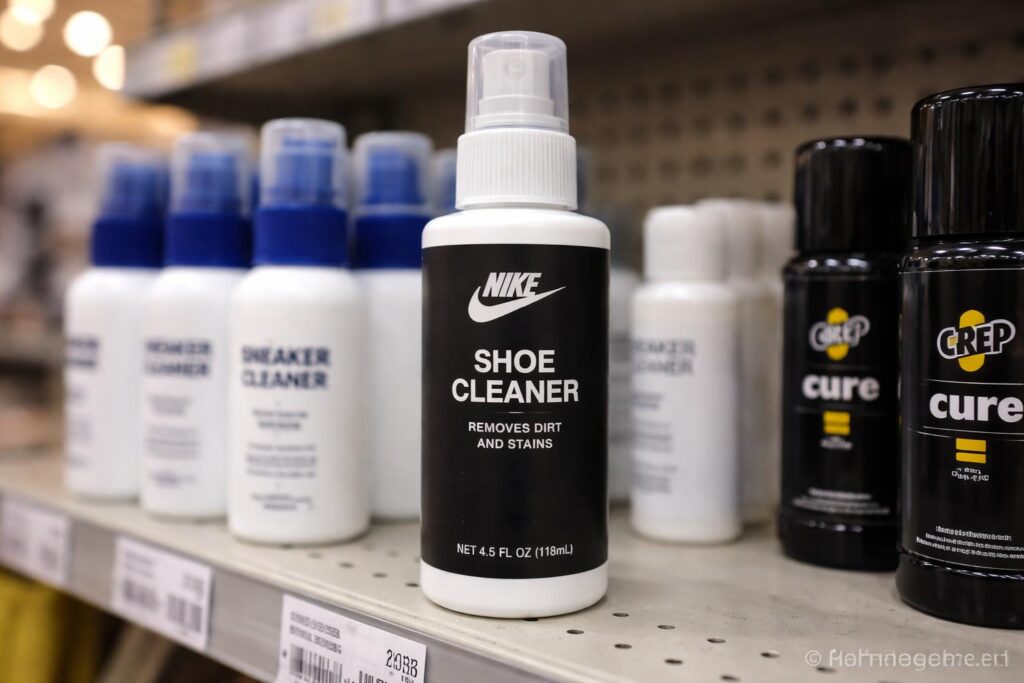
That’s where wipes come in. They’re not the main protector, but they’re useful in the same season because rainy weather creates constant little messes. If you want a practical add-on, take a look at the best cleaning wipes for Nike sneakers on sale today.
Wipes are good for quick fixes:
- after a wet sidewalk splatter
- around the toe box
- on midsoles and outsoles
- before storing shoes back inside
They’re less helpful when the shoe is soaked. In that case, don’t rub hard. Just blot, dry naturally, and clean once the surface is ready.
I used to think wipes were only for the outside of the shoe. But they’re also a nice habit-builder, because once you get used to cleaning a small mark right away, the shoe stays presentable much longer.
The best protector setup isn’t just one product
If you’re trying to get through rainy season without wrecking your Nike shoes, a single spray can help a lot. But the better setup is a small routine.
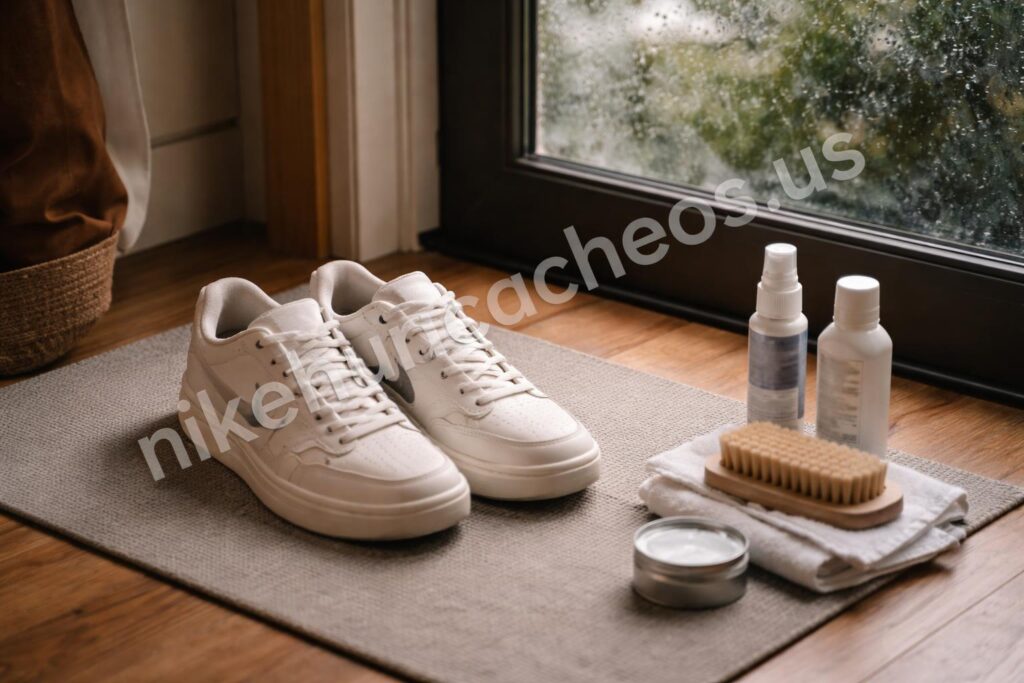
A simple kit usually covers it:
- Water repellent spray for the upper
- Cleaning wipes for fast dirt removal
- Soft brush for dried grime
- Microfiber cloth for drying and finishing
- Shoe trees or paper stuffing to help shoes hold shape while drying
That’s why a full kit makes sense for a lot of people. You don’t want to hunt for four different things every time your shoes get messy. If that sounds like your situation, this guide to the best Nike shoe care kit to buy online today is worth checking.
A kit also helps when you own more than one pair. The first shoe gets wet, then the second pair gets ignored until it’s too late. That’s usually when people start wishing they had a system.
What to compare before you buy anything
Since prices change all the time, I wouldn’t chase a single number. Final value depends on a few things that matter more than the listed price.
Compare these before buying:
- bottle size
- shipping cost
- whether the formula is safe for your materials
- number of uses you’ll get
- seller trust and return policy
- bundle discounts if you’re buying wipes or brushes too
Sometimes a “cheaper” spray is not cheaper at all if it only lasts a couple of applications. And a bigger bottle can still be a bad deal if the formula doesn’t suit suede or knit.
Always compare the total checkout price, not just the front-end price. That’s where people get fooled most often.
Mistakes that ruin the result
I’ve seen a few mistakes come up again and again. They’re easy to avoid once you know them.
Using too much spray
More isn’t better. Too much product can leave streaks or a weird finish. Light coats are usually the better call.
Spraying on dirty shoes
This traps grime underneath and can make the shoe look duller afterward.
Wearing them too soon
The protector needs time to set. If you rush it, you cut the benefit way down.
Ignoring the outsole
The upper gets all the attention, but rainy weather makes the sole ugly fast. A quick wipe after wear helps more than people think.
Treating all Nike shoes the same
A white leather Air Force 1, a mesh running shoe, and a suede lifestyle pair are not the same job. The protector may be similar, but the way you use it shouldn’t be.
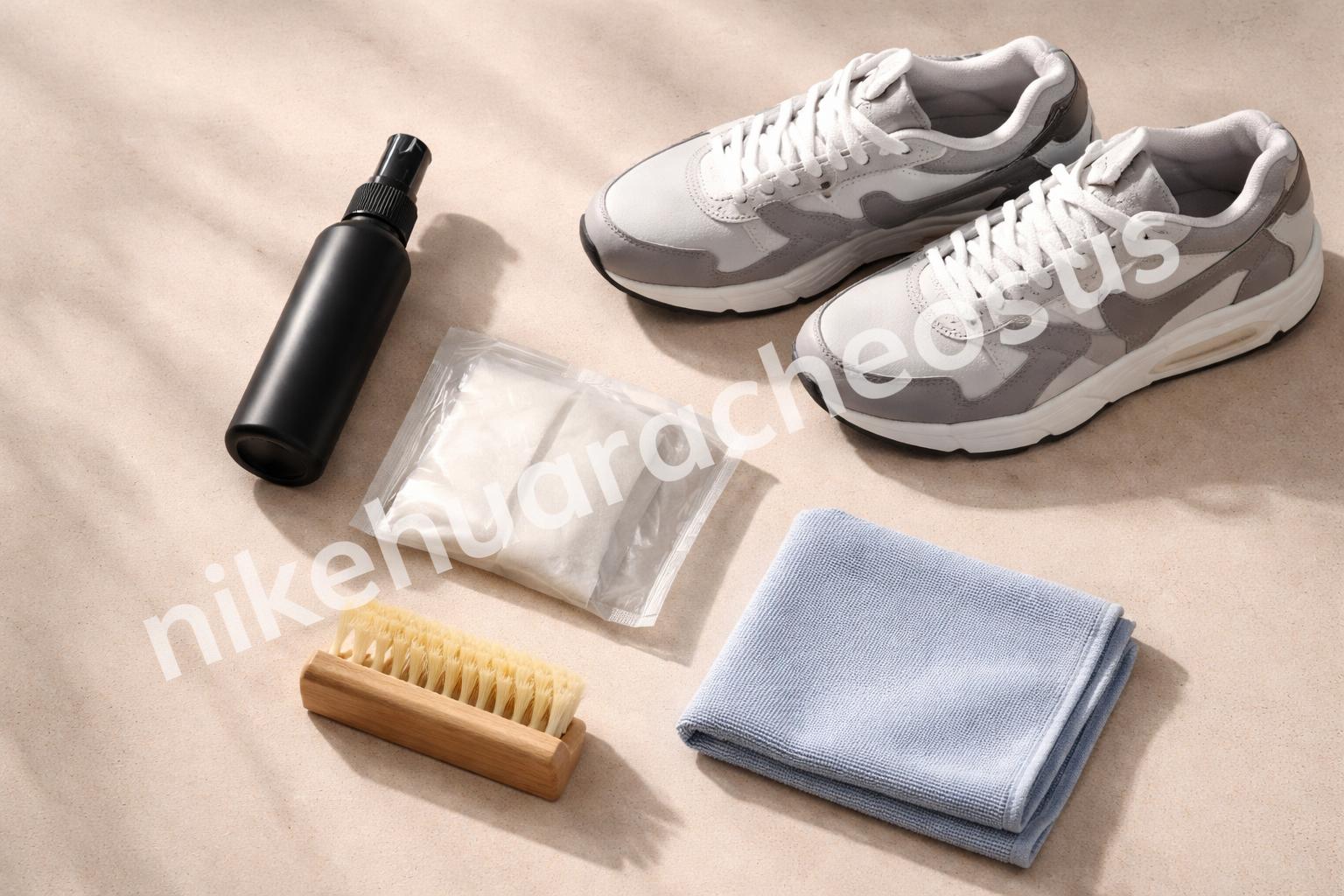
A simple rainy-season routine that actually sticks
You don’t need a big weekend cleaning project. You need something easy enough to repeat.
Here’s the routine I’d use for most Nike shoes before rainy season:
- Clean the shoe lightly first.
- Let it dry completely.
- Apply a suitable protector.
- Let it cure overnight if possible.
- Keep wipes nearby for quick cleanup.
- Reapply after a few weeks, or sooner if you wear the shoes a lot.
That’s it. Simple usually works better than fancy.
Consistency beats perfection. A basic routine done often is better than one deep clean after the damage is already bad.
If you wear Nike shoes every day, this matters more
Daily wear changes everything. Rain doesn’t have to be heavy to cause trouble. A short walk through wet streets, a morning commute, or even damp grass can leave a mark.
For everyday shoes, I’d focus on ease. If a product takes too long to apply, you probably won’t keep using it. That’s why quick-spray protectors and disposable wipes are so practical. They fit into normal life.
There’s also a comfort angle here that people forget. Wet shoes dry out awkwardly. Sometimes they feel fine on the outside but stay damp inside, and then you’re dealing with odor, shape loss, or just general annoyance the next day.
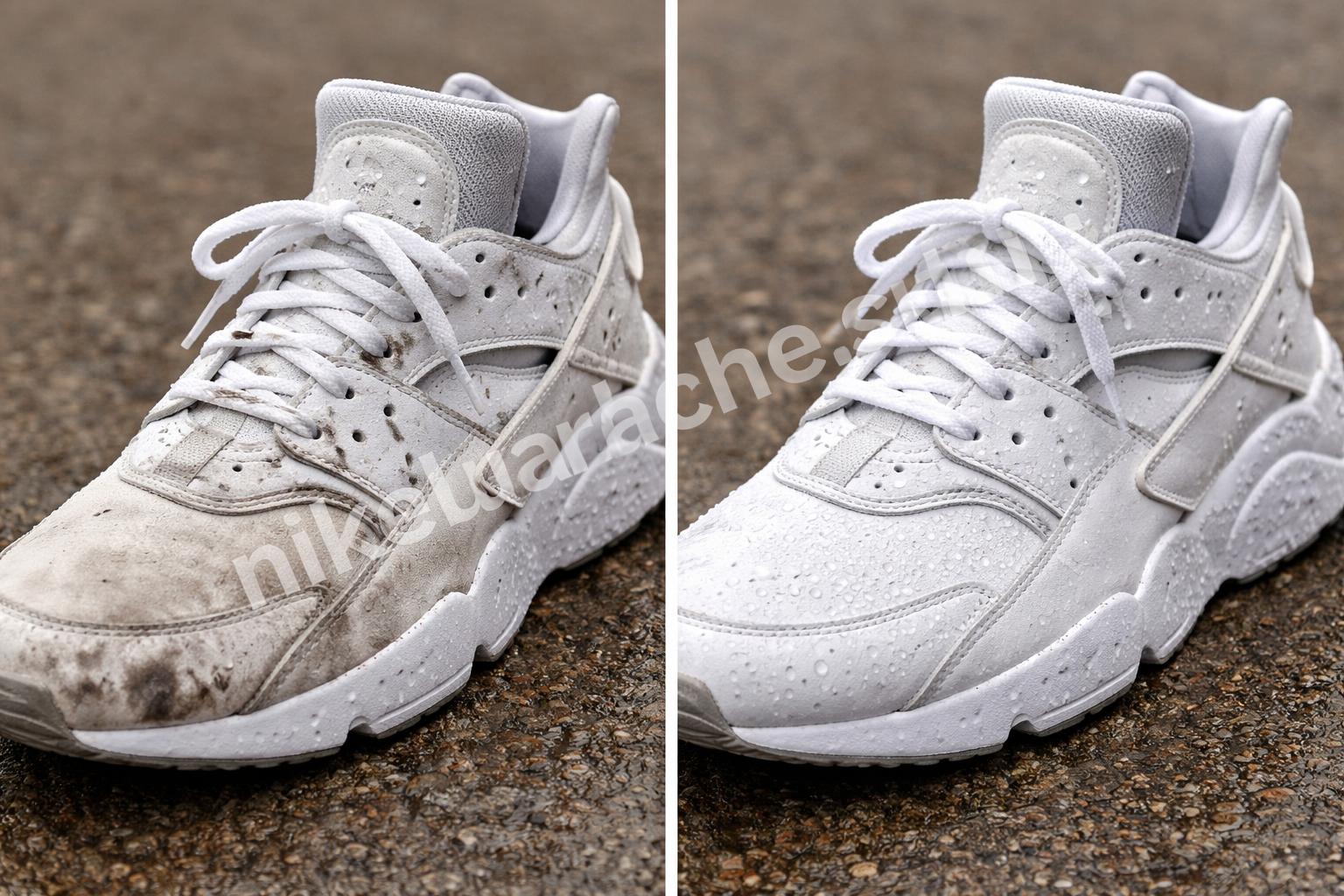
How to tell if a protector is doing its job
You don’t need lab equipment for this. You can usually tell pretty fast.
A protected shoe should handle light moisture better, with water sitting on the surface longer instead of soaking in immediately. Dirt should also wipe away more easily. That doesn’t mean the shoe stays clean forever, but cleanup should be less painful.
A few signs the protector may not be working well:
- the upper darkens right away
- water leaves a visible stain
- the surface feels sticky or stiff after drying
- the finish looks cloudy
- the shoe still smells damp after light exposure
If that happens, don’t keep layering random products on top. Strip the situation back a little. Clean the shoe, let it dry, and start again with a product that matches the material better.
The shoes that benefit most from protection
Not every pair needs the same level of attention, but some definitely benefit more than others.
- White sneakers show every splash.
- Mesh runners absorb moisture quickly.
- Suede pairs stain easily.
- Everyday commuting shoes get hit by weather more often.
- Expensive limited pairs deserve extra care because mistakes are harder to ignore.
That doesn’t mean you should ignore your other shoes. It just means some pairs are clearly worth protecting first before the rainy season starts.
A realistic final take
If you only do one thing, make it a good water repellent spray applied before the weather turns. That alone can help a lot with Nike shoes, especially if you wear mesh, knit, or suede styles.
If you want a smarter setup, add wipes and a brush so you can handle small messes before they become permanent-looking ones. That’s usually the difference between shoes that still look wearable in a month and shoes that start looking tired way too soon.
I still think the best shoe care habits are the boring ones. Clean lightly, protect early, and don’t wait until the rain has already done its work. That’s usually enough to keep a favorite pair in rotation a lot longer than you’d expect.
Save This Guide on Pinterest
Save this image to Pinterest so you can easily return to this guide later.